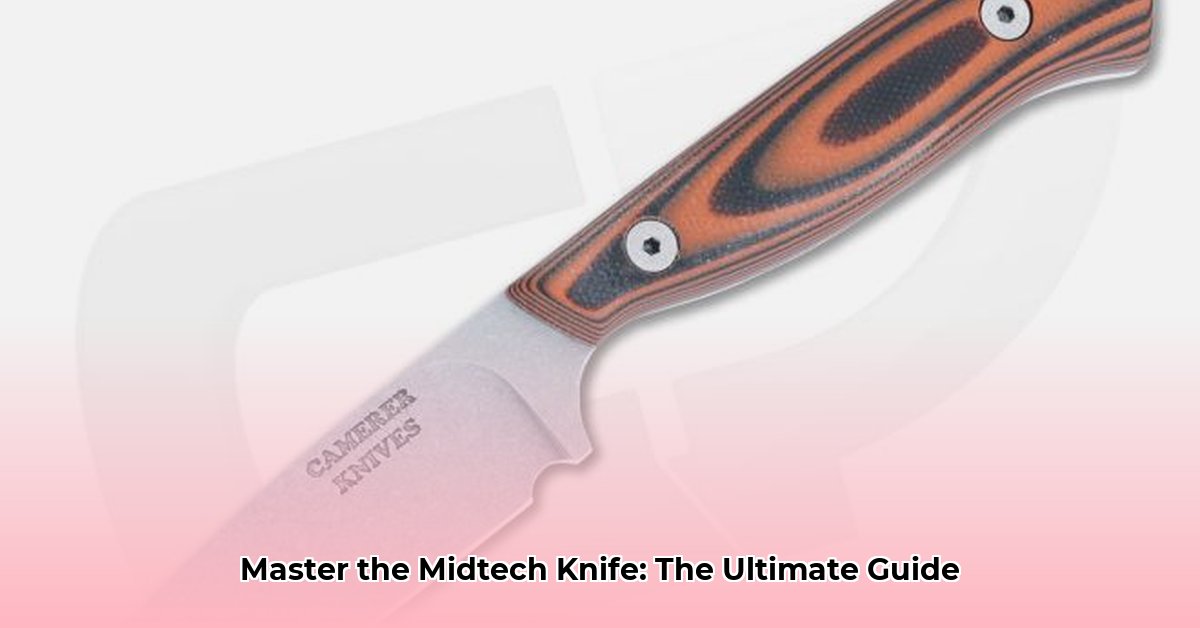
Decoding the "Mid-Tech" Mystery: What Makes a Mid-Tech Knife?
The term "mid-tech knife" gets thrown around a lot, but its meaning remains surprisingly blurry, even among experienced knife enthusiasts. Essentially, it represents a middle ground—a blend between mass-produced factory knives and entirely custom, handcrafted blades. But this seemingly simple concept is plagued by a lack of standardized definition, leading to considerable confusion in the market. This guide will dissect the term to help you navigate the complexities and make informed purchasing decisions. Are you ready to unlock the secrets of mid-tech knives?
Understanding the Manufacturing Process: Hand vs. Machine
The central debate surrounding mid-tech knives revolves around the balance between machine production and hand craftsmanship. This isn't merely an aesthetic consideration; it directly impacts the knife's performance, durability, and overall value. A true mid-tech knife, in the traditional sense, incorporates a significant amount of hand-finishing. This includes shaping, sharpening, and final assembly, all showcasing the maker's skill.
Laser cutting, a frequent point of contention, offers speed and efficiency in blade production. However, some argue that this method diminishes the handmade aspect often associated with the "mid-tech" concept, reducing the perceived uniqueness of each knife. Many skilled makers, however, successfully incorporate laser-cut blanks while simultaneously implementing extensive hand-finishing, proving it's possible to combine modern manufacturing techniques with a personal, handcrafted touch. The key factor is transparency in the manufacturing process.
Spotting a Genuine Mid-Tech Knife: A Buyer's Checklist
The lack of a clear definition opens the door for misleading marketing. To navigate the marketplace effectively, you must develop a discerning eye. Here's how to identify a genuinely handcrafted mid-tech knife:
Demand Transparency: Does the maker openly discuss their production methods and the extent of hand-finishing involved? Vague or secretive descriptions are major red flags.
Research the Maker's Reputation: Investigate the knife maker's history and read online reviews. A maker with a solid reputation usually delivers high-quality blades consistently.
Examine the Details: Carefully inspect the knife's finish. Are there inconsistencies, rough edges, or blemishes? Poor finishing suggests a lack of care regardless of materials used or marketing claims.
Consider, but Don't Over-Rely On, Price: While price isn’t the sole indicator of quality, wildly low prices for knives labeled "mid-tech" should raise suspicion. High-quality materials and substantial hand-work don't come cheap. Avoid deals that are too good to be true.
The Mid-Tech Marketplace: Navigating the Ambiguity
The inconsistent use of "mid-tech" creates market inefficiencies. It allows for potential price manipulation. Some knives might be marketed as "mid-tech," despite having minimal hand-finishing. Buyers must be vigilant. With a little knowledge, you can make better purchasing choices and avoid paying inflated prices for lesser-quality knives.
How to Identify Truly Handcrafted Mid-Tech Knives: A Deeper Dive
Key Takeaways:
- The lack of a universally accepted definition of “mid-tech” causes market confusion.
- Mid-tech knives blend machine-made components with substantial hand-finishing, but the balance varies greatly.
- Pricing usually reflects this blend; it’s generally more affordable than fully custom knives but pricier than mass-produced ones.
- Identifying a truly handcrafted mid-tech knife requires a detailed examination of construction and features. Transparency from the maker is critical.
Spotting the Signs of Handwork: A Closer Look
This section provides a more detailed guide to identifying hand-crafted features:
- Blade Finish: A flawlessly smooth, hand-finished blade is a strong indicator. Look for consistent grinds and polished surfaces. Machine-finished blades often show minor imperfections.
- Handle Construction: Are the handle materials precisely fitted? Do you observe hand-carved details or meticulously applied finishes? Mass-produced handles often feel less refined.
- Overall Fit and Finish: A high-quality mid-tech knife will exhibit a seamless integration of parts; no gaps or inconsistencies.
- Unique Features: Look for subtle, custom details that showcase the maker’s hand; engravings, carvings, or hardware choices.
Asking the Right Questions: Transparency is Paramount
Direct interaction with the maker is invaluable. Ask specific questions about sourcing, the percentage of hand-crafting, materials, and the overall process. A maker's willingness to answer these questions openly reveals confidence in their product.
Table: Key Differences Between Knife Types
| Feature | Production Knife | Mid-Tech Knife | Custom Knife |
|---|---|---|---|
| Manufacturing | Mostly automated | Mixed, significant handwork | Entirely hand-made |
| Price | Low | Mid-range | High |
| Customization | Limited | Moderate | Extensive |
| Quality | Variable | Generally high | Usually very high |
The term "mid-tech" doesn't guarantee quality. Thorough research and a critical eye are your best tools for making an informed purchasing decision. The more you understand the nuances involved, the more likely you are to find the perfect knife for your needs.